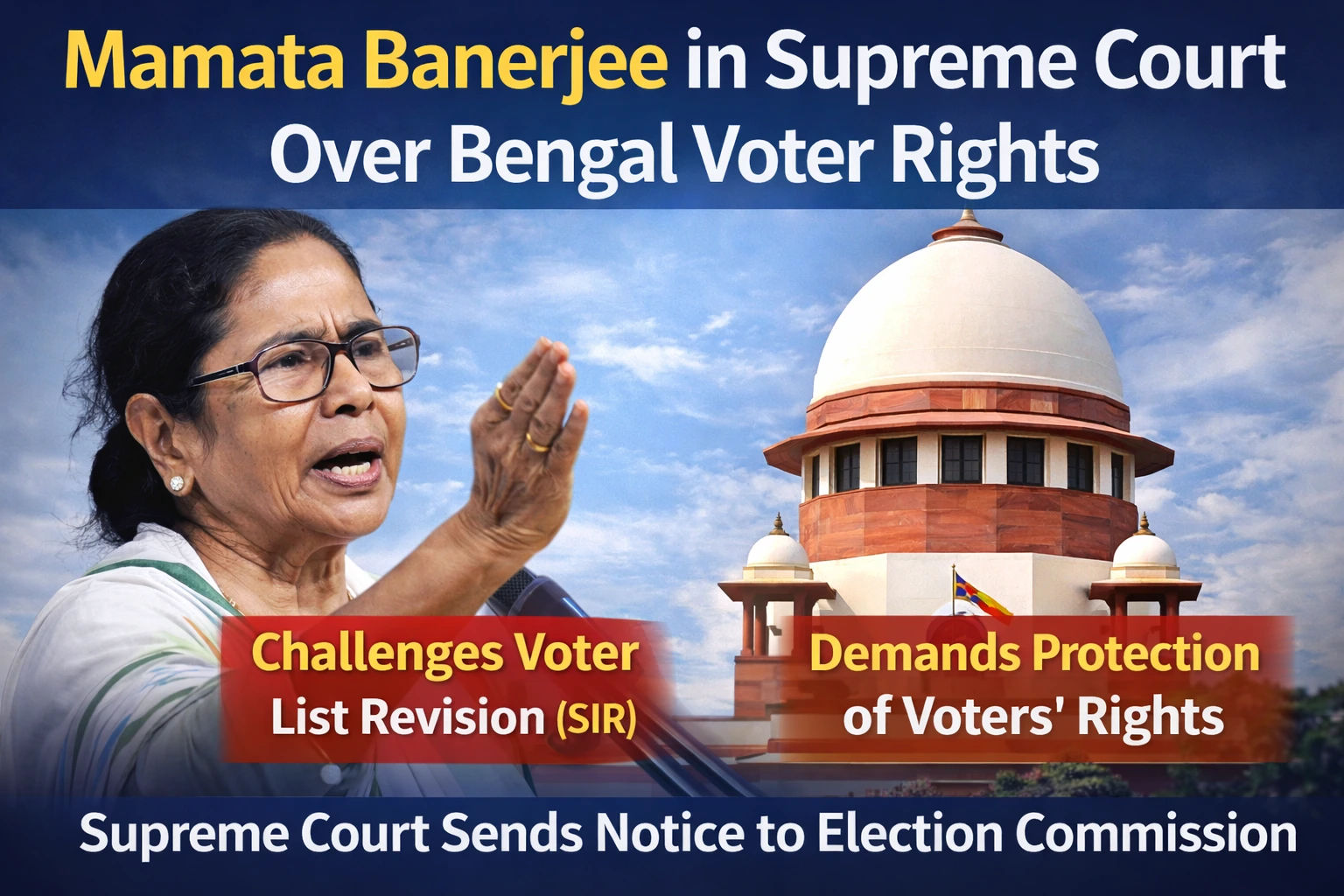
West Bengal Chief Minister Mamata Banerjee did something you don’t see every day—she walked into the Supreme Court herself and argued her case. With assembly elections just around the corner, she’s taken on the Election Commission’s Special Intensive Revision (SIR) of the state’s voter rolls, calling the whole process rushed and far too secretive.
Banerjee didn’t just send her lawyers. She stood in front of Chief Justice Surya Kant and Justices Joymalya Bagchi and Vipul M. Pancholi, laying out exactly what worries her about the SIR. The state government’s main gripe? Too many names are getting removed or wrongly tagged on the voter list, and people who have every right to vote could lose their voice in the coming election.
Also Read: India-US Trade Deal: Russian Oil Pause, Lower Tariffs, and a $500 Billion Promise
She pointed to some glaring mistakes—voters marked as “unmapped” or even written off as dead, all due to what she described as sloppy or careless checks. Even small things like spelling issues, a woman’s surname after marriage, or how names get written in local dialects were enough to get people flagged under something called “Logical Discrepancy.” Banerjee argued these aren’t real problems, and the system risks shutting out legitimate voters.
The Supreme Court took her concerns seriously. They sent notices to the Election Commission and West Bengal’s Chief Electoral Officer, told them to respond, and stressed that the voter list process needs more care and openness. Another hearing is coming up next week.
Banerjee’s bold move in court has put a big national spotlight on the fight over SIR. She’s framing it as a battle for basic fairness—making sure every citizen is counted, especially when so much is at stake for Bengal’s future.
Also Read: India Pushes Back on Rice Incentive Cuts; ISRO Flags Solar Radio Blackout Risk
The Election Commission, for its part, stands by the SIR. They say they’re just doing what’s needed to clean up the rolls and keep elections fair—removing duplicates, confirming who’s eligible, and making sure the process stays above board. But this clash between state leaders and election officials isn’t just about one list. It’s part of a bigger conversation about how India’s democracy works, who gets counted, and who gets left out.